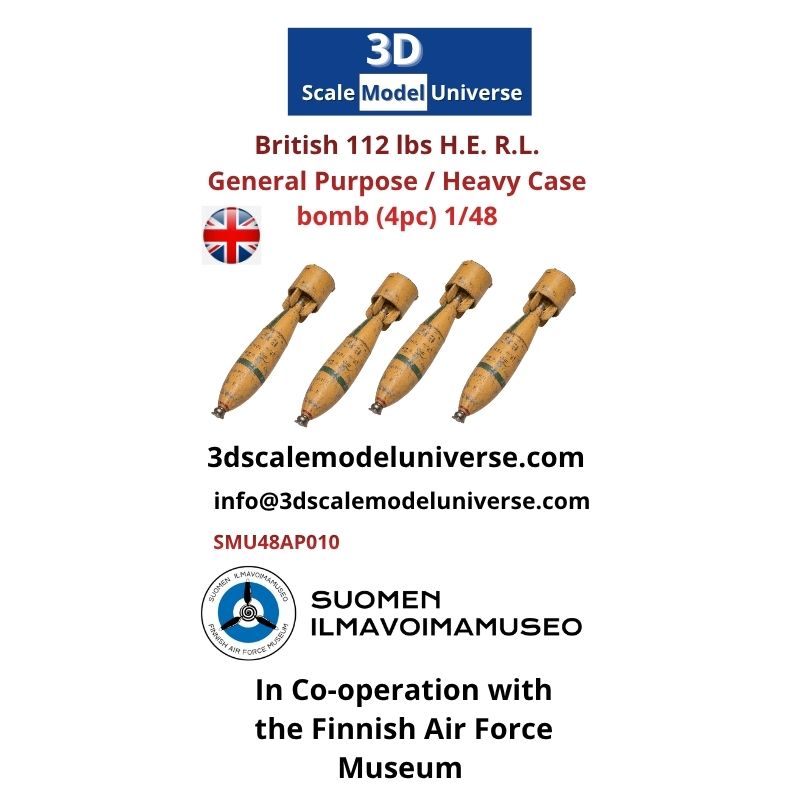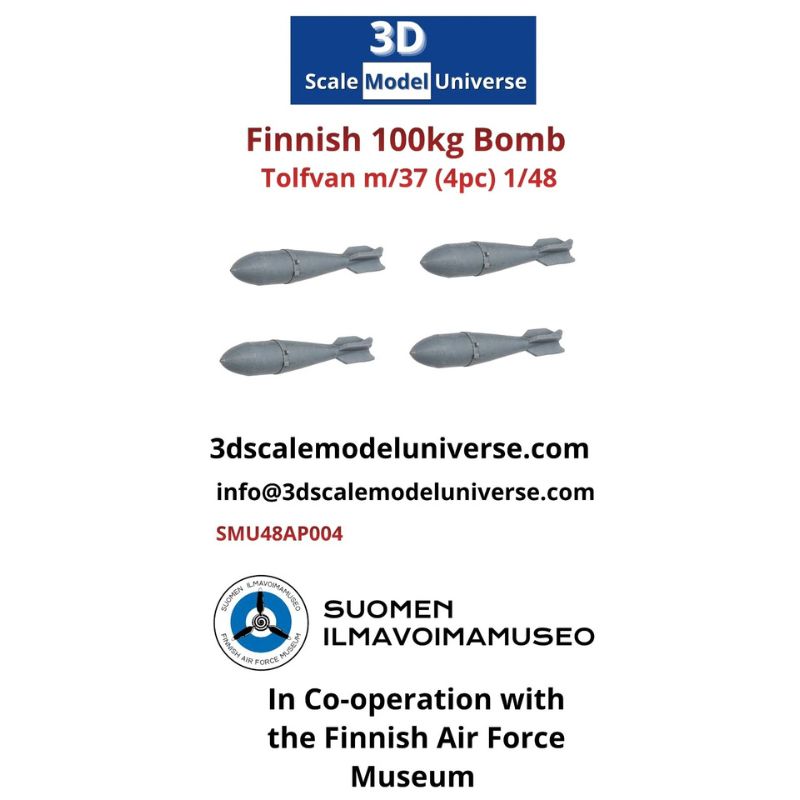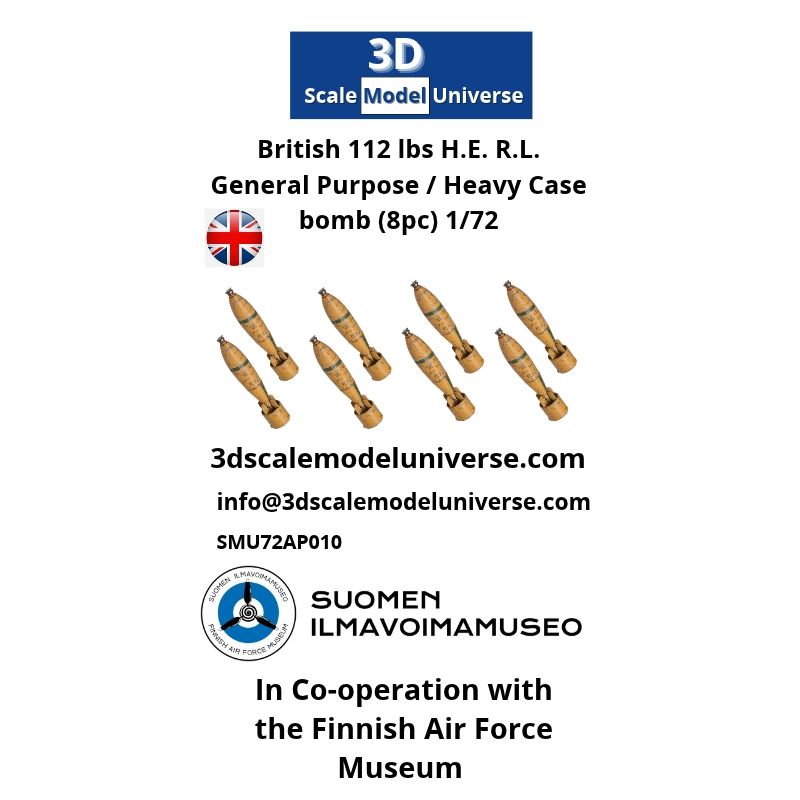
Finnish 250kg Fragmentation Bomb w/ Propeller Fuze Tolfvan m/30. (4pc) 1/48
October 8, 2026
Swedish 50 kg minbomb m/37 (8pc) 1/72
October 8, 2026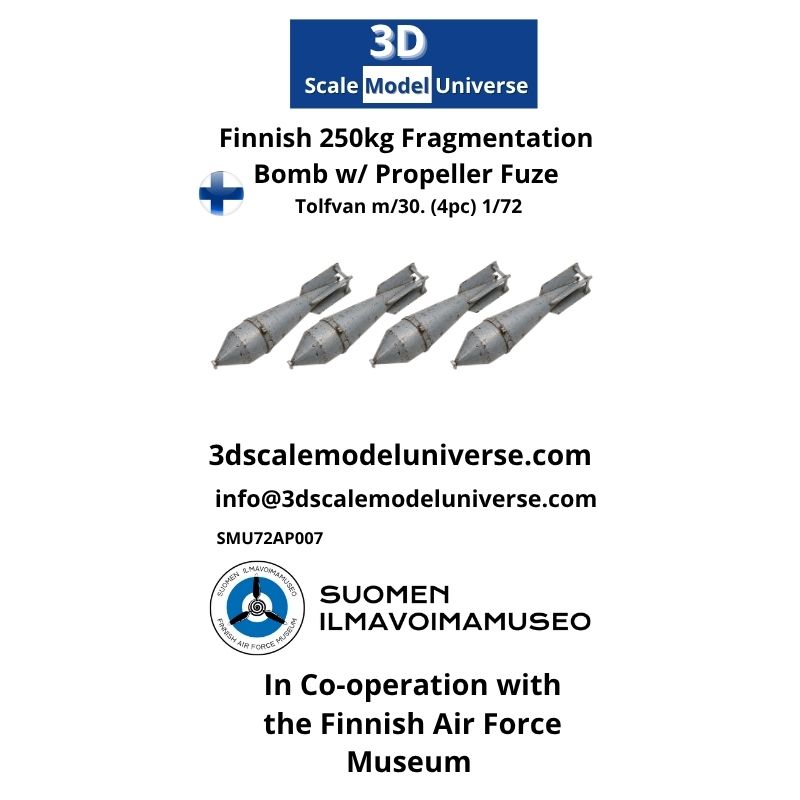
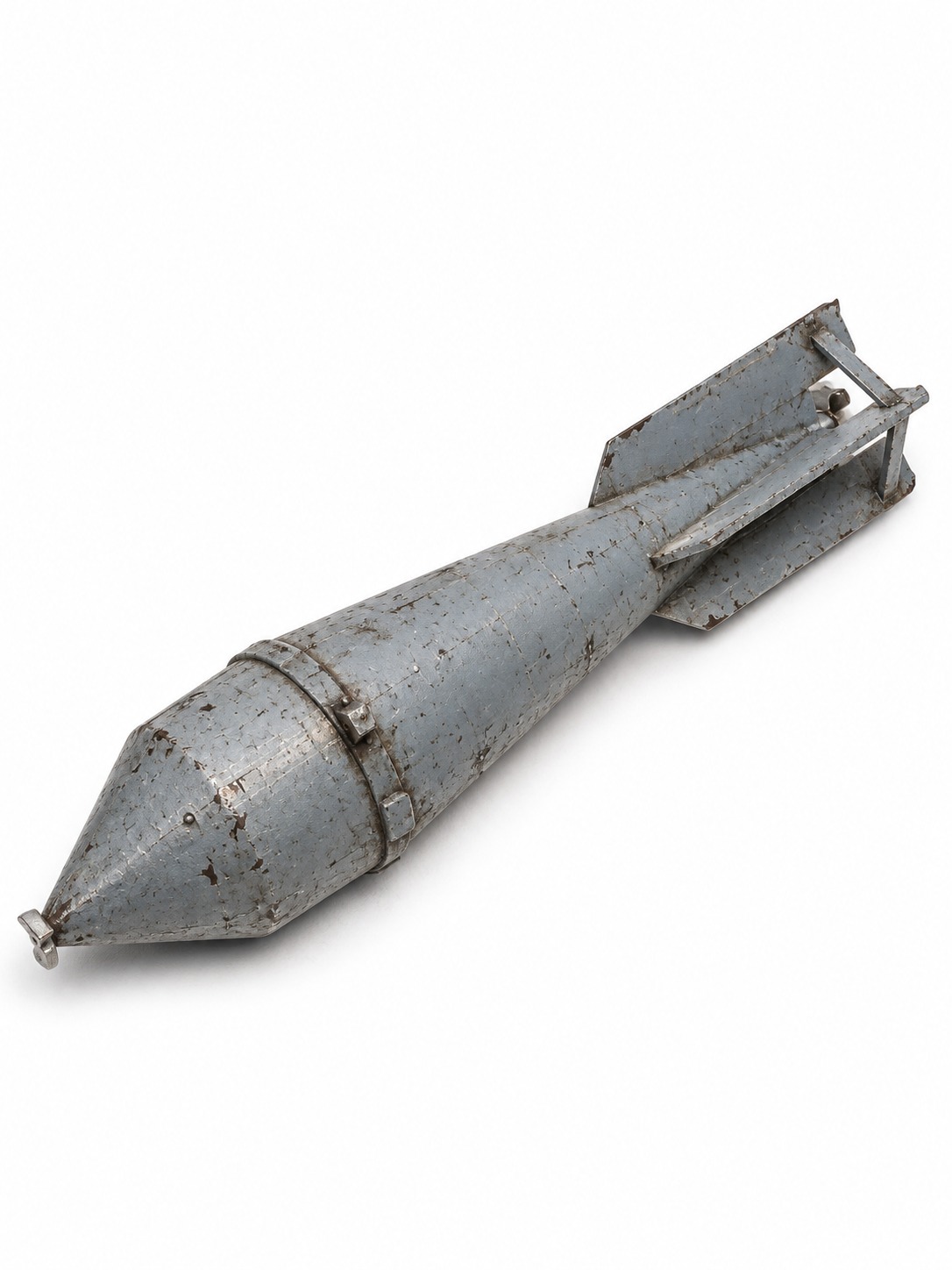
Finnish 250kg Fragmentation Bomb w/ Propeller Fuze Tolfvan m/30. (4pc) 1/72
Login to see pricesFinnish 250kg Fragmentation Bomb w/ Propeller Fuze Tolfvan m/30. (4pc) 1/72
Description
3D Scale Model Universe
Including 4 bombs.
Specifications of the 250 kg Tolfvan m/30
-
- Classification: General-purpose demolition / heavy blast bomb (Panssarimiina).
- Design Elements: Like the rest of the m/30 family developed by Oy Tolfvan Ab, it utilized a streamlined aerodynamic shell with distinct, rigid tail fin assemblies engineered to eliminate drag-producing air gaps between the body and the fins. It relied on heavy-duty internal impact fuzes.
- Strategic Deployment: This weapon was deployed against major infrastructure targets like fortified bunkers, supply bridges, and rail hubs.
- Fragmentation Bomb: The munition was engineered to shatter into numerous lethal fragments upon detonation. It was primarily deployed against soft-skinned targets, troop concentrations, supply convoys, and other unarmored assets. [1]
- Propeller Fuze: This refers to a mechanical, air-travel-activated nose fuze equipped with an arming propeller (specifically following the designs patented by Finnish military officer Ernst Otto Utter). When the bomb was dropped from an aircraft, the airflow caused the small propeller on the nose to spin. After a predetermined number of rotations, the fuze mechanically armed itself at a safe distance from the aircraft, ensuring it would detonate only upon impacting the target.
Aircraft Integration
Due to its massive size, the 250 kg m/30 was reserved for larger bomber configurations. It was notably configured into the heavy payload arrays for:
- Captured Soviet Tupolev SB-2 Bombers: The Finnish Air Force heavily modified its captured SB-2 fleet (such as the SB-2M100A variants) to carry the 250 kg m/30bis (Tolfvan) internally within the main bomb bay.
- Heavy Bomb Racks: It required heavy-duty internal shackles to withstand the weight before mechanical release
Additional information
| Country | Finland |
|---|---|
| Scale | 1/72 |
| Era | 1939-1945 |